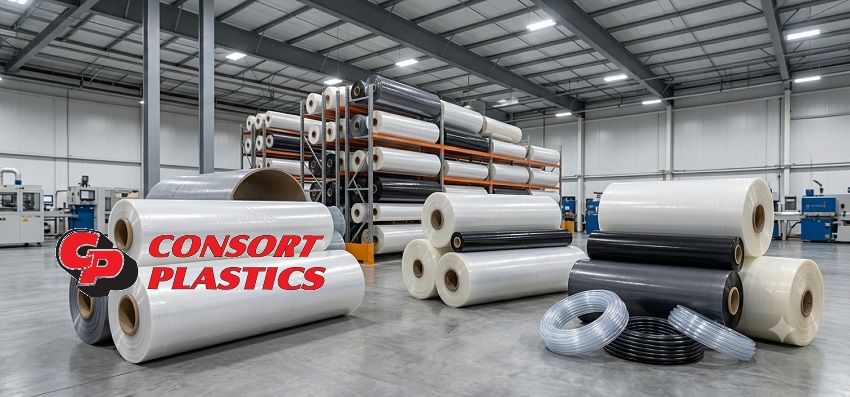
Whether you call it plastic sheeting, poly film, or plastic rolls, this incredibly versatile material is the unsung hero of modern industry. From heavy-duty construction sites to high-tech agricultural setups, plastic sheetings provide essential protection, containment, and barrier properties.
In this ultimate guide, we dive deep into the technical specifications, different material types, and practical applications of industrial plastic sheeting.
What is Plastic Sheeting?
At its core, plastic sheeting is a continuous film of plastic material, typically sold in large rolls. It is engineered in varying thicknesses—measured in “mils” (where $1\text{ mil} = 0.001\text{ inches}$)—to deliver specific tensile strengths, puncture resistance, and flexibility depending on the job at hand.
Key Material Types of Plastic Sheetings
Not all plastic sheetings are created equal. The performance of the film depends entirely on the polymer resins used during manufacturing. Here are the three most common types dominating the market today:
1. Low-Density Polyethylene (LDPE) Sheeting
-
Characteristics: Highly flexible, excellent clarity, and conforms easily to irregular shapes.
-
Best Used For: Temporary dust barriers, light-duty equipment covers, and surface protection during painting.
2. Linear Low-Density Polyethylene (LLDPE) Sheeting
-
Characteristics: Enhanced strength compared to standard LDPE, offering superior puncture resistance and exceptional stretch capabilities without tearing.
-
Best Used For: Industrial wrapping, heavy pallet covers, and high-stress wrapping applications.
3. High-Density Polyethylene (HDPE) Sheeting
-
Characteristics: Crinkly, rigid, and incredibly strong. It offers maximum tensile strength and acts as an exceptional moisture and vapor barrier.
-
Best Used For: Vapor barriers under concrete slabs, pond liners, and long-term outdoor storage covers.
Essential Industrial Applications
The sheer versatility of plastic sheeting makes it indispensable across multiple core sectors:
Construction & Building
In construction, heavy-duty plastic sheetings (usually 6 mil or thicker) are mandatory building materials. They serve as:
-
Under-Slab Vapor Retarders: Preventing ground moisture from seeping up through concrete foundations.
-
Abatement Barriers: Sealing off spaces during hazardous material removal or sandblasting.
-
Weather Enclosures: Wrapping unfinished building frameworks to keep out rain and wind so indoor work can continue.
Agriculture & Horticulture
Farmers rely on specialized plastic sheeting to control environments and maximize crop yields:
-
Greenhouse Films: UV-stabilized plastic rolls engineered to withstand prolonged sunlight while diffusing light for optimal plant growth.
-
Silage Covers: Heavy black-and-white sheeting used to protect winter livestock feed from oxygen and moisture spoilage.
Packaging & Logistics
In warehouses, massive rolls of clear plastic sheeting protect inventory from dust, moisture, and shifts during transit, ensuring goods arrive at their destination in pristine condition.
How to Choose the Right Plastic Sheeting (Mil Thickness Guide)
Selecting the wrong thickness can lead to premature tearing or unnecessary project costs. Use this quick reference guide to find the perfect match:
| Thickness (Mils) | Class | Primary Applications |
| 1 to 2 Mil | Light-Duty | Economy drop cloths, dust protection, lightweight packaging. |
| 3 to 4 Mil | Medium-Duty | Equipment covers, temporary window sealing, wall protection. |
| 6 Mil | Heavy-Duty | Standard construction vapor barriers, remediation drop cloths, shipping covers. |
| 10 to 20+ Mil | Super Heavy-Duty | Crawlspace encapsulation, long-term outdoor liners, construction site root barriers. |
Frequently Asked Questions (FAQs)
What does “mil” mean in plastic sheeting?
A “mil” is a unit of measurement used to define the thickness of plastic sheetings. One mil is equal to one-thousandth of an inch ($0.001\text{ in}$). It does not mean millimeter.
Is clear plastic sheeting completely transparent?
While LDPE and LLDPE plastic sheeting offer excellent light transmission, industrial-grade poly film often has a slight translucency or milky appearance due to the density of the resins used for durability.
What is the difference between visqueen and plastic sheeting?
“Visqueen” is simply a popular brand name for polyethylene film that became so widely used in the construction industry that it turned into a generic trademark for heavy-duty plastic sheeting.
Comments are closed
Contact Us

ForRental
26 Capsicum Ave
Marlboro Gardens, Sandton, 2063
Cell Phone: +27 642463678
info@digitalmarketingpta.co.za
https://www.forrental.co.za
Send us Mail